Advancing Mechanically Lined Pipe Technology for the Industry’s Next Challenges
Pioneering MLP Innovation
Cladtek has advanced Mechanically Lined Pipe (MLP) technology with innovations such as tailored engineered weld overlaid ends. This development alone has redefined industry standards and broadened the applications for MLP – positioning Cladtek as a technical leader in MLP.
Cladtek’s first MLP project was delivered in 2004 for Santos in Australia on the Mutineer-Exeter offshore development. The project scope involved supplying 11 kilometres of pipe for installation at a depth of 300 metres – a significant technical challenge for the industry at that time.
This project marked the start of Cladtek’s breakthrough journey in MLP technology, paving the way for a series of milestone projects and new industry benchmarks.
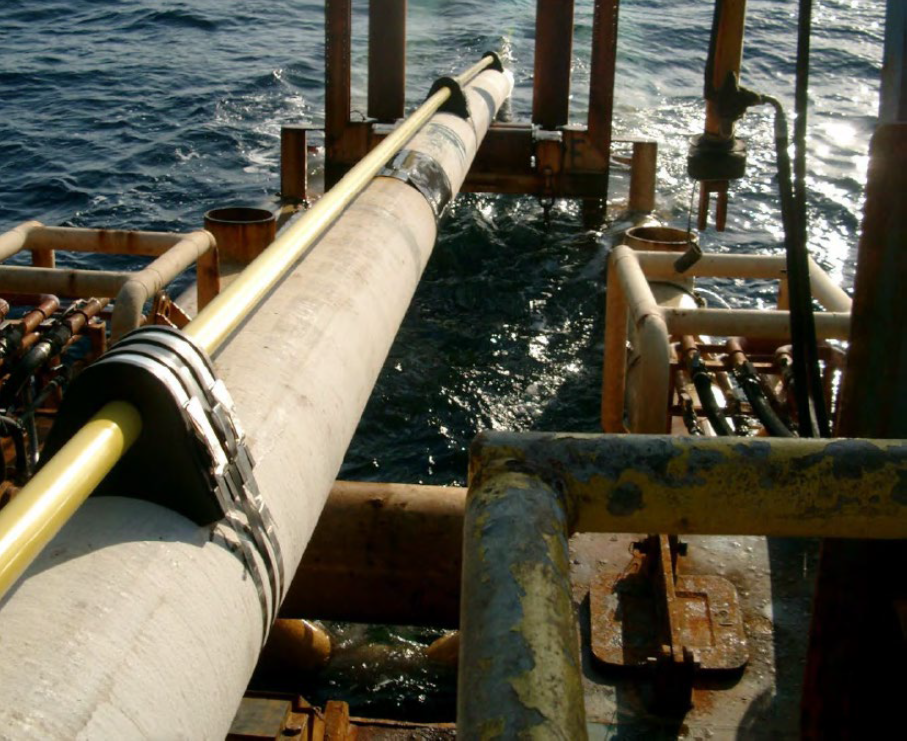
Meeting Project Demands with Custom MLP Technology
Alongside the introduction of weld-overlaid ends, the Mutineer–Exeter offshore development delivered another major breakthrough – the first successful application of High-Frequency Welded (HFW) Pipe in MLP technology. Where competitors’ manufacturing methods couldn’t accommodate HFW pipe for MLP’s, Cladtek’s process made it possible – broadening the range of pipe options available to clients for future projects.
This capability stems from Cladtek’s fabrication sequence, specifically engineered to keep the backing pipe within its elastic range while maintaining its original dimensions and mechanical properties.
This means any type of backing pipe can be used provided it meets the API5L / API5LD standards. For clients this results in greater supply flexibility, lower capital costs and improved product quality. Notably, the Mutineer-Exeter pipeline, now marked for decommissioning, completed its full design life without a single reported integrity issue.
This project opened the door for the successful integration of HFW Pipe in MLP technology. HFW pipe is produced by forming a steel strip into a pipe and welding the longitudinal seam using high-frequency electric current without adding filler metal. This method delivers consistent wall thickness, tight dimensional tolerances and a smooth internal surface – making it an ideal fit for precision-engineered MLPs.
“HFW-backed MLPs have since been applied in other projects, further demonstrating the versatility and reliability of the solution. It is a more cost-effective option as it reduces pipe cost and eliminates the need for internal corrosion allowance,” explained Dr. Ahmed Reda, New Technology Manager & Pipeline Design & Testing SME.
Engineering the World’s Smallest-Diameter MLP
Building on its success, Cladtek set out to tackle one of the most demanding technical challenges in the industry – producing small diameter MLPs. In 2005, Cladtek supplied nearly 90 kilometres of 4-inch pipe for Pertamina’s South Sumatra Gas Gathering Project in Indonesia. To date this remains the smallest-diameter MLP the company has produced.
“The line has remained in service since then, with the pipes maintaining structural integrity and corrosion resistance under continuous operating conditions. The installation serves as a reference case for the long-term application of small-diameter MLPs,” confirmed Reda.
When producing small-diameter MLPs the tooling must be miniaturised to access the internal bore – a task that calls for highly precise and robust engineering. Cladtek’s in-house expertise in this area, combined with its ability to consistently achieve tight manufacturing tolerances, has positioned the company as a trusted partner in advancing pipeline technology.
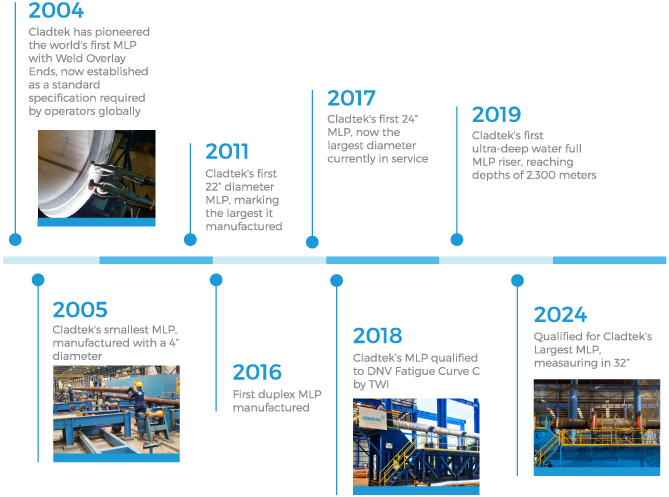
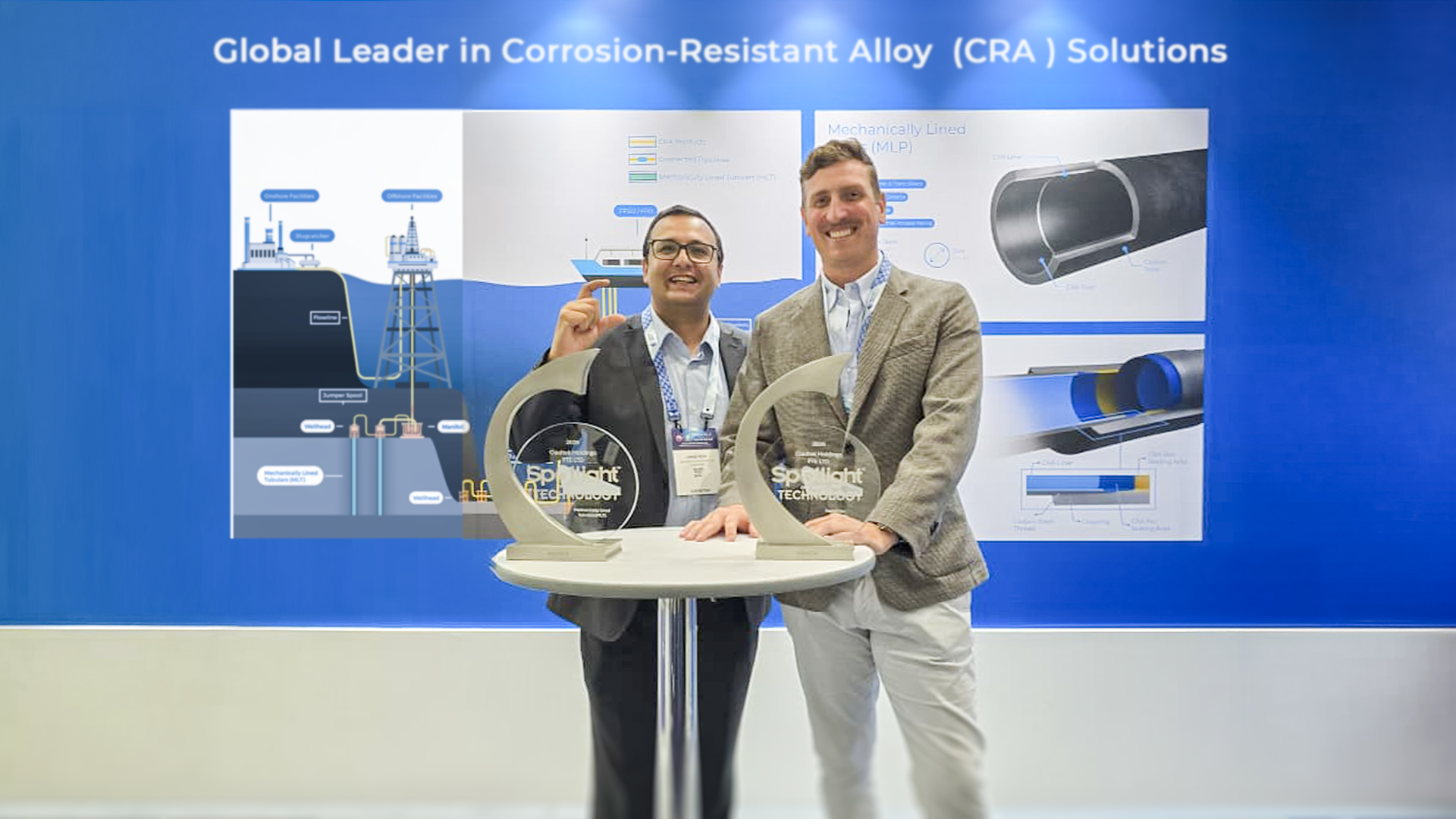
Cladtek's Achievements Over the Years
Large-Diameter MLPs for Deepwater Efficiency
From delivering the smallest diameter MLP’s in its history, Cladtek moved to meet the needs of the industry by developing large-diameter solutions essential for deepwater projects. In 2011, the company delivered a custom made 22-inch seamless MLP for Husky Energy’s Liwan development offshore China, marking its first application in a large-diameter pipeline.
The larger-diameter MLPs are critical for deepwater operations because they support higher flow rates, reduce the number of flowlines and enable longer tiebacks. This enhances efficiency in gas export systems and CO₂-rich environments. a.
The project underscores Cladtek’s ability to design and deliver MLPs that balance efficiency, capacity and durability in the most demanding offshore environments.
Cladtek then went on to supply a 24-inch MLP for ExxonMobil’s Idoho BP–QIT CRA Pipeline Replacement in Nigeria – still the largest operational MLP in the world today.
“Delivering the world’s first 24-inch MLP is a clear demonstration of Cladtek’s ability to turn innovation into real value. This breakthrough not only delivered significant commercial benefits for our customer but has also been installed and operating reliably from day one. It reflects Cladtek’s track record of world-first achievements and our commitment to pioneering technological advances that shape the future of our industry.” Steven Goodier, SVP – Global Sales, Marketing & EMEA.
First MLP Riser in Ultra-Deep Water
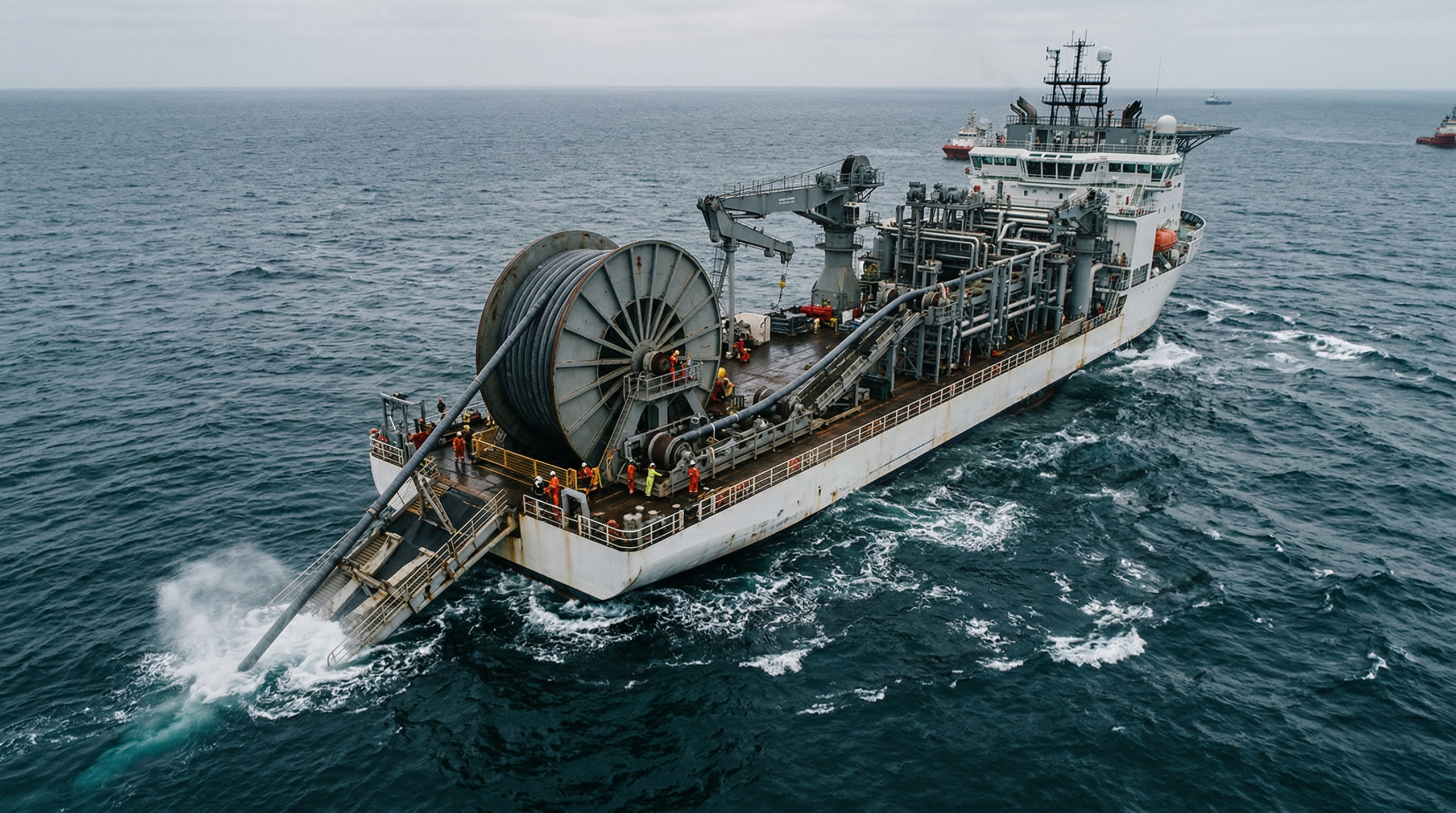
Mero-1 in Brazil marked the world’s first full deployment of MLP in an ultra-deep dynamic riser flowline service. Nearly 100 kilometres of 6 and 8 inch MLP were supplied for the project, connecting 13 wells in Petrobras’ giant pre-salt Libra reservoir. Installed at a depth of 2100 metres in a steel lazy wave riser configuration, this marked the deepest installed full MLP riser anywhere in the world.
Traditionally, flexible risers had dominated deepwater projects despite their high costs and failure rates. Cladtek demonstrated that rigid MLP risers could deliver a more durable and cost-effective solution without compromising safety or performance. To do this, Cladtek introduced refinements in pipe-end design, additional CRA reinforcement in critical areas along with rigorous full-scale testing to validate performance during reel-lay installation.
Mero-1 also marked Cladtek’s expansion into Brazil with a new manufacturing base. The operation grew from 60 to more than 600 employees, with 99% Brazilian nationals. The project advanced global MLP capability and built local capacity through on-the-ground skills development.
Future Readiness
Looking ahead, Cladtek has qualified a 32-inch MLP for a major operator. When compared to the standard HRB alternative, the 32-inch MLP provides significant commercial benefit whilst providing technical and installation benefits due to the tighter, more consistent pipe end tolerances.
With a 36-inch variant developed and internally tested, these larger-diameter MLPs are ready for deployment in future high-demand applications.
Cladek also helps shape the future of MLP technology through Joint Industry Programs (JIP) multi-company R&D collaborations that turn shared test data into practical design methods and ultimately, updated standards. In DNV’s four phase initiative, Cladtek supplied the materials and full-scale test results used to validate the design formulae in the DNV-ST-F101 standard.
More recently, Cladtek also contributed to a TWI led JIP that set out the latest advances and current best practice in mechanically lined pipe.
Beyond collaboration, Cladtek is deeply committed to developing MLP solutions to meet evolving industry needs through rigorous internal testing. First commissioned during our inaugural project, our full-scale testing rig has been continually upgraded to replicate real installation and operating conditions. And it’s the insights from this process that drive continuous product improvement and validate the innovations central to Cladtek’s development strategy.