The Evolution of MLP: Setting New Standards in Corrosion-Resistant Pipelines
Innovation is the driving force behind the energy industry and one of Cladtek’s core values. The constant pursuit of technological advancements and cost-effective alternatives pushes this sector to develop groundbreaking solutions that revolutionize the market.
Until the early 2000s, the industry struggled with costly or technically limited solutions for pipelines subjected to High Pressure/High Temperature application and mild to severe sour service and corrosive fluids. This created an opportunity for Cladtek to further enhance the Mechanically Lined Pipe (MLP), setting a new standard for CRA clad pipe products and advancing the development of MLP Corrosion-Resistant Pipelines.
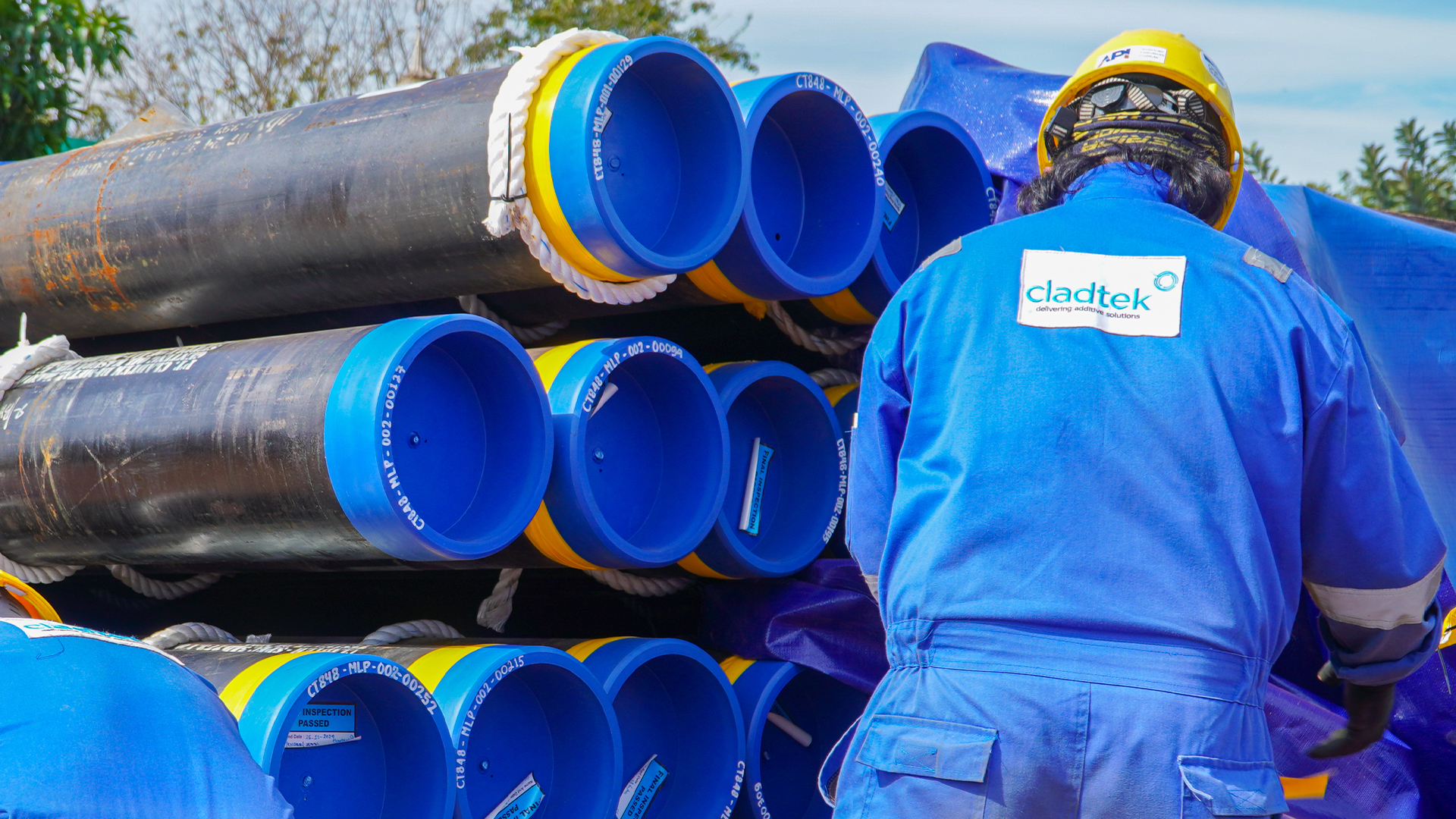
Cladtek's Mechanically Lined Pipe
The Need for a New Pipeline Solution
Before MLP, rigid pipeline design options were limited to carbon steel, solid CRAs as supermartensitic and superduplex stainless steels, and metallurgically clad pipes to combat pipeline corrosion. Each of these options had limitations. Metallurgically clad pipes, for example, were expensive, unavailable in smaller sizes, and had restrictions on the diameter-to-thickness (D/T) ratio. At that stage, MLP with sealed ends severely hampered MLP installability, making it a complex and limited option with challenges associated to non-destructive testing (NDT) and complex installation procedures.
Recognizing these challenges, a key innovation was introduced in the market by Cladtek.
“During our early stages, we pioneered the addition of weld overlay ends to MLP and slightly shifted the non-bonded area back from the pipe’s end,” said Paul Montague, founder of Cladtek and developer of the company’s patented MLP manufacturing process.
This improvement made the pipe easier to bevel, simplified handling for cutouts, and improved NDT – applicable techniques and reliability. Investing just 3–5% more in costs to overlay the ends, Cladtek developed a product that combines most of the benefits of both seal-welded MLP and hot roll bonded (HRB) pipes. Not only did it provide metallurgically bonded ends, but the machining process also improved end tolerances, resulting in significantly increased installation efficiency, allowing more efficient installation methods as S-Lay, J-Lay and eventually Reel-Lay to be used with MLP.
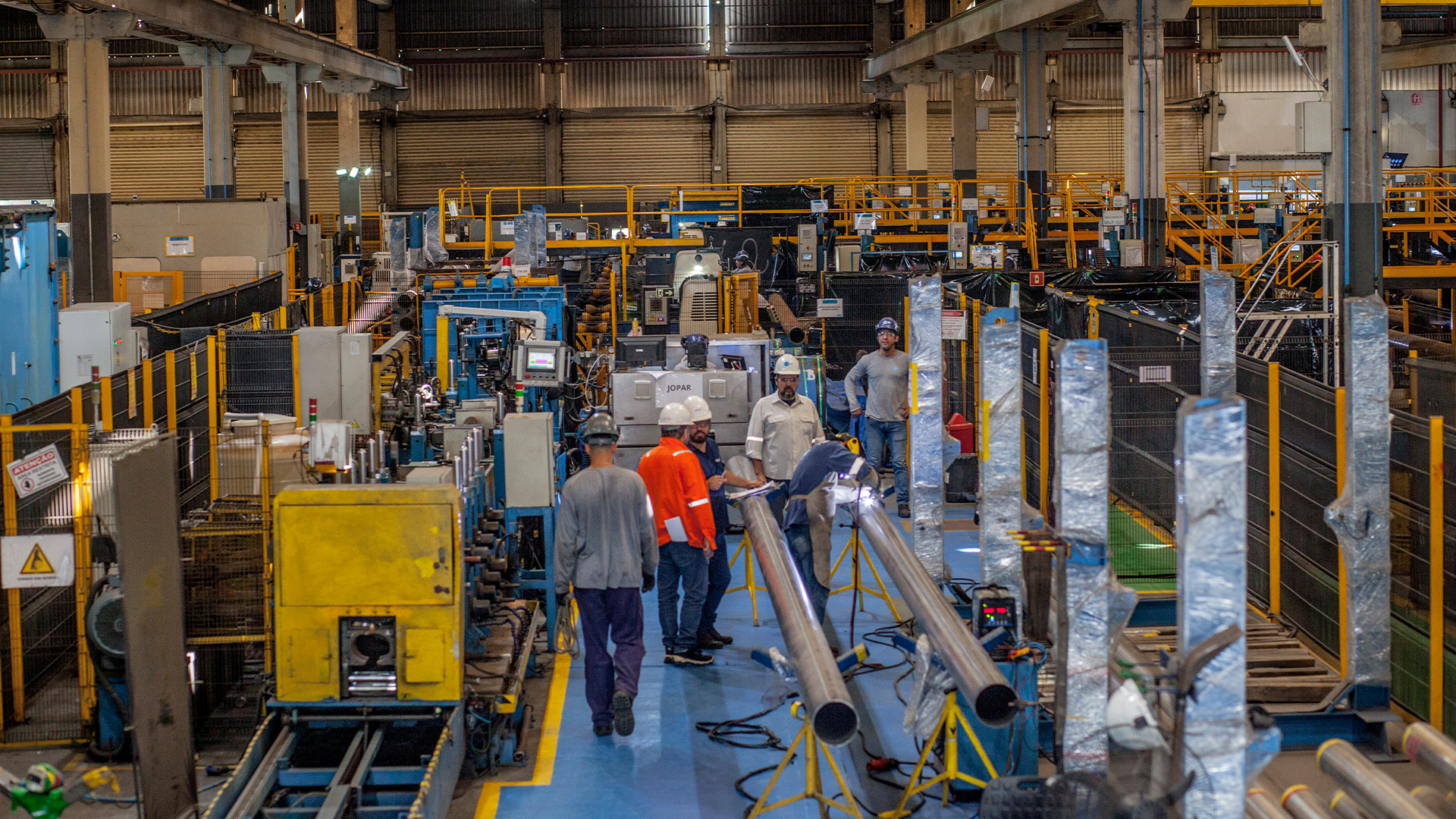
Cladtek Brazil's Facility
Leading the way for Corrosion-Resistant Pipeline Solutions
Cladtek’s innovation with Weld Overlay Ends marked a turning point for MLP, paving the way for broader market acceptance. Since the company’s first order in 2003, the solution has steadily evolved, achieving new technical milestones and expanding its presence in offshore fields around the world.
The technological advantages of MLP have enabled its use across a wide range of projects, from shallow waters to deepwater developments. In 2019, it was deployed in the world’s first full MLP riser in Brazil’s Mero field, at a water depth of 2,100 meters. Since then, MLP has continued to gain ground in ultra-deepwater projects and carbon capture initiatives.
“When I founded Cladtek 21 years ago, I couldn’t have imagined the market growing to the scale it has reached today. A large project was once around 10 to 20 kilometers—now, orders of 100 kilometers are common. We’re the youngest player in the industry, yet we lead in developing new technologies and applications”, commented Paul Montague.
Cladtek’s commitment to innovation, research and development provides solutions for our customers, pushing the boundaries of MLP application and ensuring it remains at the forefront of energy infrastructure solutions.